
What to Know About Remodeling a Home in Bend, Oregon
Not every dream home starts with a bare lot. Some of the most rewarding projects we've taken on at Copperline have been remodels — homes with good bones, great locations, and owners who saw something worth saving.
But remodeling in Central Oregon comes with its own set of challenges. The high desert climate, older housing stock in core Bend neighborhoods, a competitive trade market, and seasonal construction windows all shape the process in ways that are different from new construction. Whether you're looking at a whole-home renovation, a major addition, or a thoughtful update to a home that no longer fits how you live, there's a lot worth understanding before demo day.
We take on select remodeling projects — typically larger-scale renovations where strong project management and real craftsmanship make a meaningful difference. Here's what we've learned from doing this work for over twenty years.

Renovate or Build New?
This is the first question worth answering honestly. Not every home is a good candidate for renovation, and sometimes starting fresh is the smarter move — financially and practically.
Remodeling tends to make sense when the location is irreplaceable, when the lot and neighborhood are exactly what you want, or when the existing structure has real character worth preserving. Zoning and setback constraints can also tip the scale — a teardown and rebuild might not give you the footprint you need on a tight lot, while a renovation with a well-planned addition might.
On the other hand, if the foundation is compromised, the layout is fundamentally wrong, or the cost of bringing an older home up to current code approaches the cost of building new, that's a conversation worth having early.
Our McCann House renovation is a good example of a home that was unquestionably worth saving. Built in 1915 by a prominent Portland architect, it carried a century of Bend history in its walls. Tearing it down was never the right answer — restoring it was. You can read more about the history of the McCann House here.
Common Types of Remodels We See in Bend
Remodeling covers a wide range of scope, and every project is different. But the ones we typically take on fall into a few categories.
Whole-home renovations are the most complex. These involve rethinking the entire house — layout, systems, finishes, and sometimes structural elements. The goal is usually to preserve what's worth keeping while making the home perform like new. Our True Vintage project is a good example — a home with strong historic character that needed modern performance and a completely reimagined interior.
Additions expand a home's footprint to accommodate how life has changed. Maybe it's a new primary suite, a great room that opens to the backyard, or a guest wing. The challenge with additions is making the new space feel like it was always part of the house — matching rooflines, materials, and proportions so the result reads as one cohesive home. River Lodge combined both — a full overhaul of a dated home paired with a large addition that transformed the property while keeping everything feeling like one cohesive design.
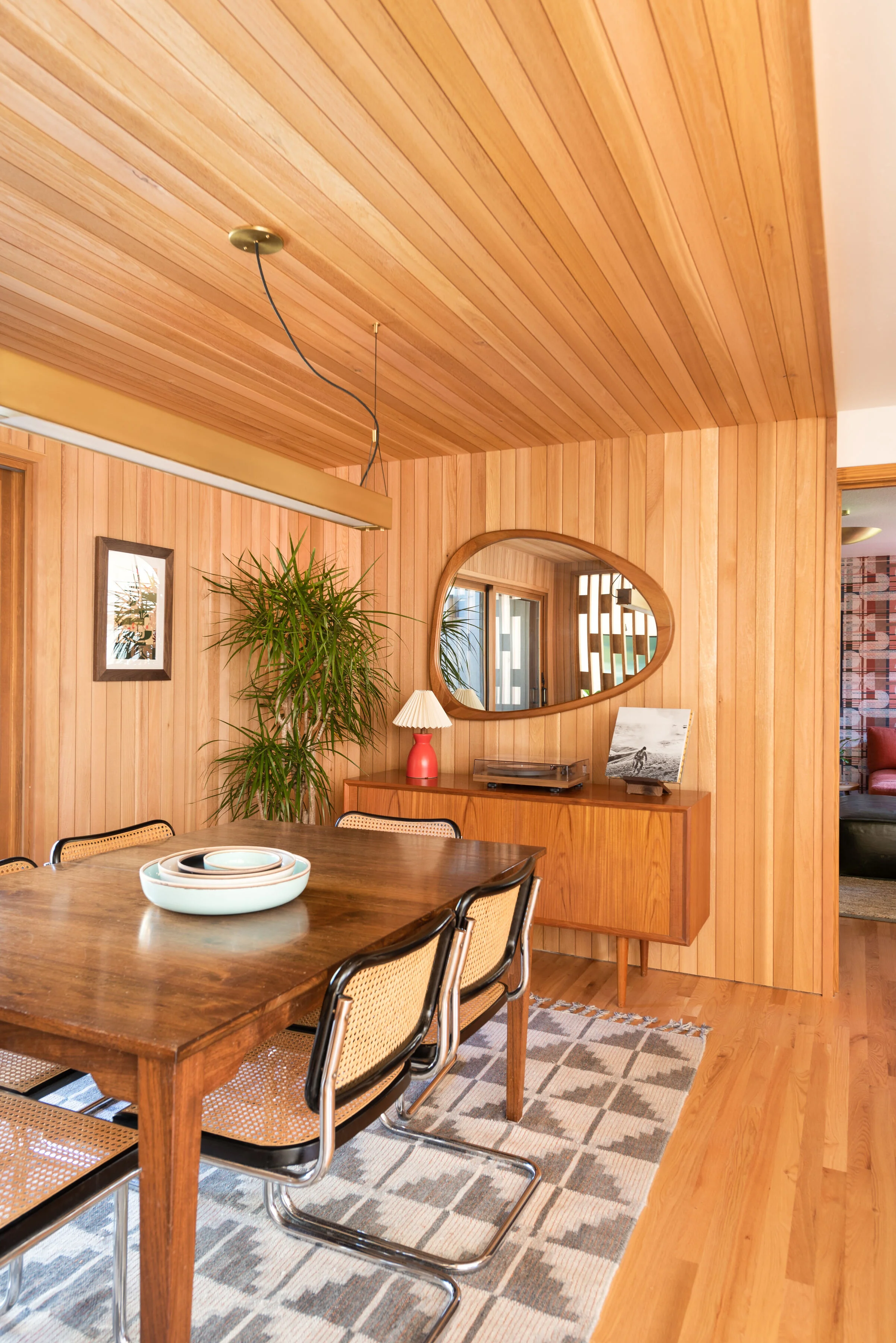
Style and systems overhauls update a home without necessarily changing the layout. Sometimes the location is irreplaceable and the bones are solid — the house just needs new life. New finishes, fixtures, lighting, mechanical systems, and energy upgrades can transform how a home looks and feels without tearing it down and starting over. Retro Redux was exactly this — a great location, a workable layout, and a house with good bones that needed updated systems and revitalized interiors to match how the owners actually wanted to live.
Kitchen and bath renovations are the most common remodeling projects, and for good reason — these are the rooms where quality and function matter most in daily life. Even within a larger whole-home renovation, the kitchen and baths tend to drive the budget and the timeline.
What Does a Remodel Cost in Bend?
Cost is the question everyone asks first, and it's the hardest to answer without knowing the specifics of your home and your goals. Remodeling costs in Bend vary widely based on the scope of work, the condition of the existing structure, your material and finish selections, and how much of the home's systems need to be updated.
What we can say is that remodeling almost always carries more financial uncertainty than new construction. With a new build, you're working from a clean set of plans and a known starting point. With a remodel, you're inheriting someone else's decisions — and you won't know all of them until the walls are open.
"There's something deeply satisfying about taking a home that's lost its way and bringing it back to life with the care and craftsmanship it deserves."
That's one reason we use cost-plus pricing for our projects. You pay the actual cost of labor, materials, and trade partners, plus a clearly defined builder fee. Every invoice, every line item, every allowance is tracked and shared with you monthly. When the scope of a remodel shifts — and it almost always does to some degree — cost-plus means you're never paying a hidden markup on the change. You see exactly where the money goes.
We also build contingency into the budget from the start. For remodels, this is critical. A typical contingency might range from 10-15% of the construction budget depending on the age of the home and how much investigation we've been able to do before pricing. That's not a slush fund — it's a realistic cushion for the unknowns that live inside every renovation.
Hidden Conditions — The Biggest Variable
This is what separates remodeling from new construction. What's behind the walls, under the floors, and above the ceilings matters enormously — and you often can't fully know until demolition begins.
In Bend, we commonly find outdated electrical wiring that doesn't meet current code, undersized or improperly supported framing, moisture damage from years of ice dams or poor flashing details, plumbing that's at the end of its useful life, and insulation that ranges from inadequate to nonexistent.
In older homes, lead paint and asbestos are real possibilities. Any home built before 1978 could have lead-based paint, and asbestos can show up in floor tiles, pipe insulation, siding, and textured ceilings. Testing and proper abatement aren't optional — they're required by law and they protect your family.
When we renovated the McCann House, we found century-old sawdust packed between layers of lath and plaster — it had been used as insulation when the home was built in 1915. Discoveries like that are part of what makes renovation work fascinating, but they're also exactly why thorough investigation and realistic budgeting matter.
Our approach is to do as much investigation and documentation as possible before locking in pricing. We open up selective areas, test materials, inspect structural elements, and map out the home's systems so we have the clearest possible picture of what we're working with. It doesn't eliminate every surprise, but it can reduce them dramatically.
Permitting and Code Compliance in Bend
Not every remodel requires a permit, but most significant projects do. In general, anything that involves structural changes, electrical or plumbing work, changes to the building envelope, or an addition will need a permit from the City of Bend or Deschutes County.
Here's where it gets nuanced: when you open up walls on an older home, you may trigger code upgrade requirements that go beyond the scope of your original project. Current energy code, structural bracing requirements, egress standards, and fire separation rules can all come into play depending on what you're doing and how much of the home is being affected.
For additions, setback and lot coverage calculations matter. You may have less buildable area than you think, especially on older Bend lots that were platted before current zoning rules. It's worth understanding these constraints early — before you fall in love with a floor plan that won't fit.
If your home is in a neighborhood with an HOA or architectural review committee, add that process to your timeline. Many Central Oregon communities — including some of the more established neighborhoods in Bend — have design guidelines that cover everything from materials and colors to rooflines and landscaping. These reviews run alongside city permits and can add weeks to your schedule depending on meeting cycles and turnaround times.
Timeline — How Long Does a Remodel Take?
Timelines vary widely based on scope, and remodeling schedules are inherently less predictable than new construction. Every home carries its own history — and its own surprises.
What we can say is that significant renovations take time. A whole-home renovation or a major addition is a complex project that unfolds over many months, and the timeline depends on factors that aren't always known at the outset — the condition of the existing structure, the extent of structural changes, permitting, material lead times, and what you find once walls are opened.
Several factors can extend any remodeling schedule. Discovery of hidden conditions is the most common — you can't always plan for what you find. Permit timelines in Bend vary depending on project scope and seasonal workload. Specialty materials like custom windows, imported tile, or specific fixtures need to be identified and ordered early. And the Central Oregon trade market is competitive — scheduling the right subcontractors requires advance planning and strong relationships.
We provide a realistic schedule with key milestones and decision points at the start of every project, and we keep you updated as things evolve. We'd rather give you an honest timeline upfront than an optimistic one that falls apart. Remodeling schedules require more flexibility than new construction, but transparency about where things stand and what's coming next is something we never compromise on.
Choosing a Remodeling Contractor in Bend
Remodeling requires a different skill set than building new. You're solving problems in real time with an existing structure — working around conditions you didn't create and making decisions on the fly that affect the rest of the project. The contractor you choose needs to be comfortable with ambiguity, experienced with older construction methods, and disciplined about communication and documentation.
Here's what we'd suggest looking for:
Experience with your type of project. Not all builders are comfortable with renovation work. Ask specifically about projects similar to yours — whole-home renovations, additions, work on older homes. Ask to see them, and talk to the homeowners if you can.
Transparent pricing. Remodels are where opaque pricing gets homeowners in trouble. Fixed-price contracts on renovation work often lead to corners being cut or change orders that balloon the budget. Cost-plus with open books gives you visibility into where every dollar goes — and creates a collaborative relationship instead of an adversarial one.
Communication and documentation. Remodeling generates more decisions per week than new construction. Your contractor needs a system for tracking those decisions, communicating progress, and keeping you informed without overwhelming you.
CCB licensing and insurance. This should go without saying, but verify it. Oregon requires all contractors to hold an active Construction Contractors Board license. Ask for the number and look it up.
References you can actually call. Talk to past clients. Ask about the hard parts — how the contractor handled surprises, budget changes, and timeline shifts. That tells you more than any portfolio photo.
Making a Home Worth Keeping
Some of the most meaningful projects we've worked on have been renovations. There's something deeply satisfying about taking a home that's lost its way — structurally, aesthetically, or functionally — and bringing it back to life with the care and craftsmanship it deserves.
The McCann House gave us the chance to preserve a piece of Bend's history. True Vintage let us honor a home's original character while bringing it up to modern performance and finish standards. River Lodge was a complete transformation — a full overhaul paired with a major addition that gave the home an entirely new identity. And Retro Redux proved that when the location is right and the bones are solid, updated systems and revitalized interiors are all it takes to make a home feel brand new.
If you're considering a remodel in Bend or Central Oregon, we'd love to hear what you have in mind. Let's talk →
Copperline Homes has been building and remodeling custom homes in Bend and Central Oregon since 2004. We specialize in select renovations and high-end custom builds — built on relationships, transparency, and craft.